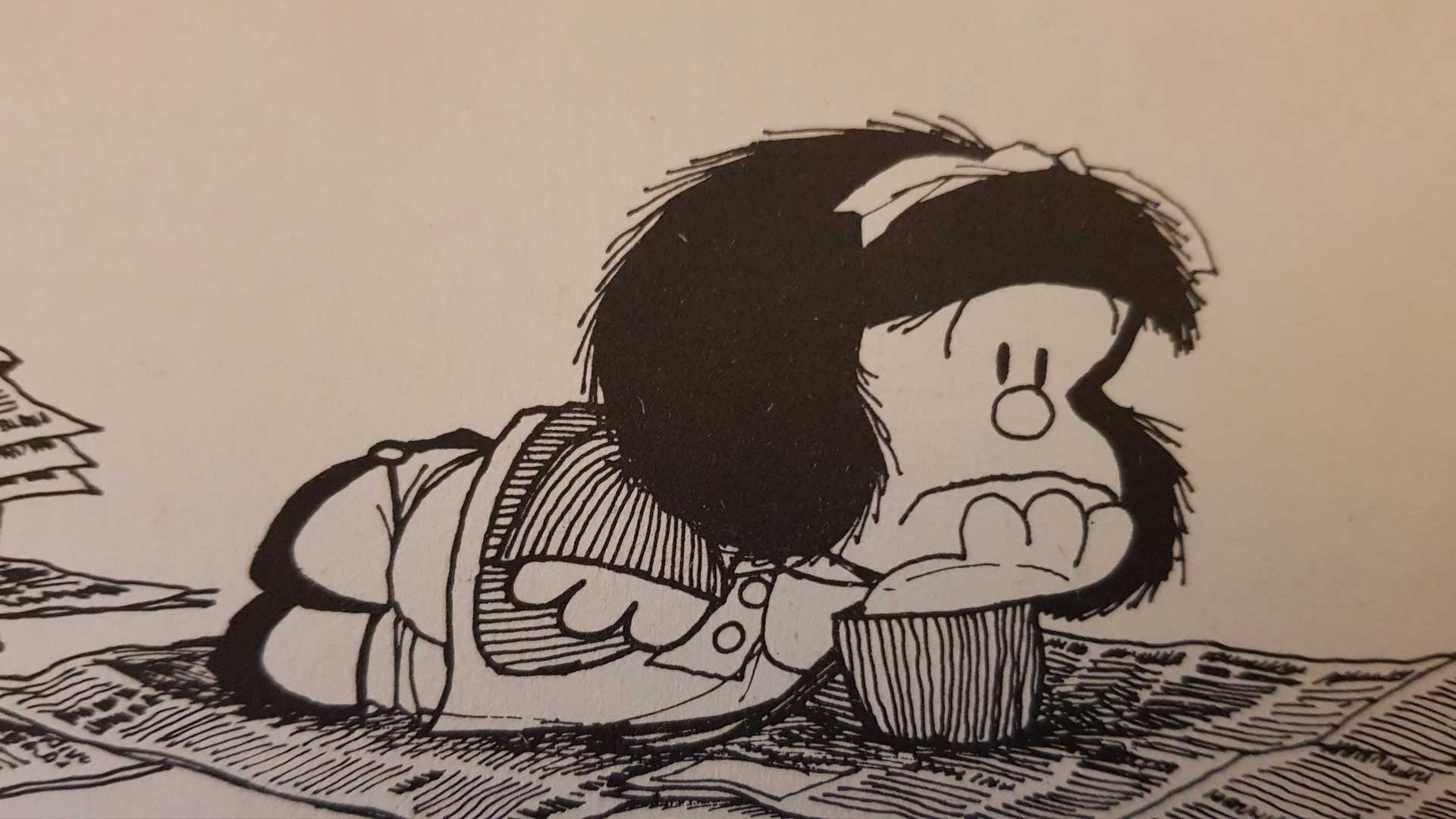
“They told me I should lose weight; but I hate losing!”

by Reo Aromi

When we talk about dieting, our minds instantly associate it with deprivation, restriction, and loss. And really, who likes to lose anything?

The quip by Quino’s beloved character Mafalda —“They told me I should lose weight; but I hate losing!”— is a small stroke of genius because it exposes a universal misunderstanding: when we talk about dieting, our minds instantly associate it with deprivation, restriction, and loss. And really, who likes to lose anything?

Perhaps that’s precisely why so many diets fail before they even begin, because they are born from a sense of sacrifice, from a battle against oneself.
But what if we flipped the perspective? What if we approached the idea of a diet as a way to gain something instead, confidence, self-respect, physical well-being, and, above all, health?

To do so, we need a little more discipline, but not the military kind. As Andrea Giuliodori writes in his book La Svolta, discipline can be seen as “the highest form of self-love.” It means respecting ourselves and our bodies, giving them what truly makes them feel good. It’s not a matter of counting calories, but of changing attitude.
 

In recent years, a wave of new approaches has emerged that overturn the traditional concept of dieting. It’s no longer just about chasing numbers on a scale, but about building a system of habits that help us feel better —inside and out.

Take intuitive eating, for example. It encourages us to listen to the body’s natural signals: eat when you’re genuinely hungry, stop just before you’re full, and allow yourself the so-called “forbidden foods” without guilt, ideally as a reward for something you’ve achieved, rather than as a way to cope with frustration or sadness.

It’s a return to common sense, reminding us that the body has its own wisdom, we just need to train ourselves to hear it. Deep down, we all know which foods don’t sit well with us; so if we truly care about ourselves, we’ll avoid them naturally. We don’t need a strict diet to enforce what is, in the end, an act of self-love.

The Health at Every Size (HAES) movement takes this idea even further: health isn’t defined by centimetres, dress size or body weight, but by sustainable habits. A body that’s cared for, well-nourished, that moves with joy and rests enough can be healthy even if it doesn’t fit the so-called aesthetic standards. Surely you’ve had that moment when you cut out a certain food or drink for a while and instantly felt better, right?

And then there are those simple rituals that help us eat better and live healthier, little daily choices that make a world of difference.
But we’ll explore those in more detail in the next article.


Author: Reo Aromi