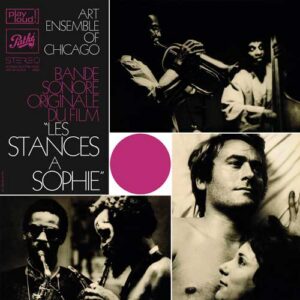
Talking about the Art Ensemble Of Chicago means talking about the grandeur of Black music, capable of spanning centuries and continents. Born from the creative ferment of Chicago’s AACM in the 1960s, the collective carried its radical vision around the world. If one album captures their essence perfectly, it’s Les Stances à Sophie from 1970.
This isn’t just a Free Jazz record; it’s a multilayered work embracing every form of African-American music —from bebop to gospel, blues to African traditions— enriched with influences from European classical music.
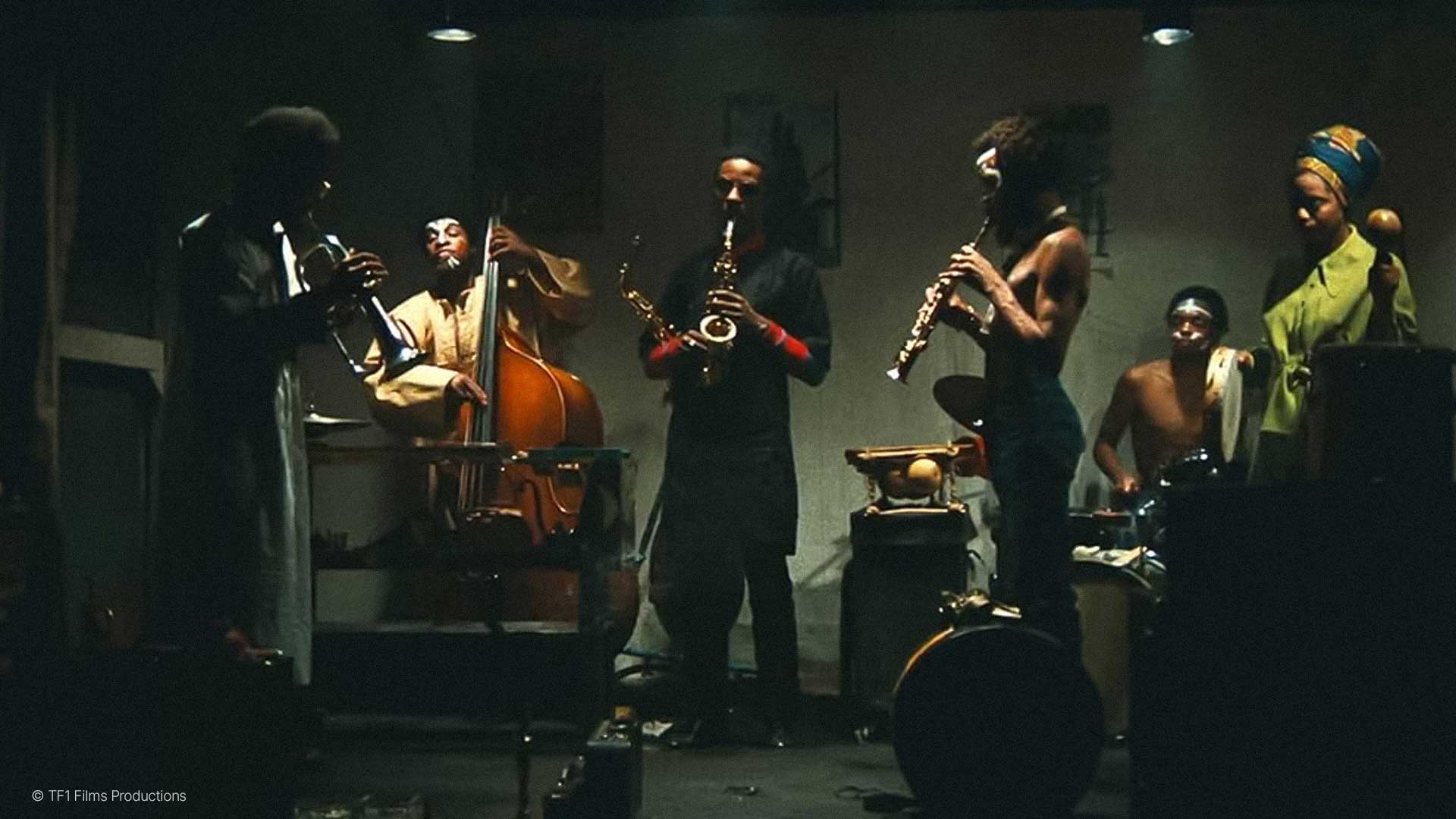
And on stage? Total theatre: costumes, face paint, hundreds of small instruments —whistles, horns, you name it— all part of a unique sonic universe.
In 1969, founders Lester Bowie (trumpet), Roscoe Mitchell (saxophones), Joseph Jarman (saxophones), and Malachi Favors (bass) chose Paris as their refuge, drawn by the creative freedom absent in the United States. There, in 1970, they were commissioned to compose the soundtrack for the French film Les Stances à Sophie, which explores marital crises and the evolution of women in a changing era.
Drummer Don Moye joined the ensemble, solidifying the historic quintet, alongside singer Fontella Bass, whose raw soul added an unexpected pop edge.
The album opens with “Theme De Yoyo,” a track that grabs you immediately: an irresistible groove, danceable bass and drums, and an intense soul vocal. It’s an epoch-defining mix of Funk, Soul, and Free Jazz, demonstrating that the AEOC refused to be confined to a single genre — instead, they absorbed them all to embody the grandeur of Black music.
The following tracks explore the line between experimentation and melody. Theme De Céline keeps a melodic focus even within free improvisation. Variations Sur un Theme de Monteverdi transform an Italian Renaissance theme into jazz, bridging eras and continents. Theme Libre is pure, explosive, collective Free Jazz, punctuated with dreamlike moments created by small percussion instruments.
Les Stances à Sophie remains a seminal album: it proves that Free Jazz can be cerebral, spiritual, yet overwhelming and danceable at the same time — a true sonic journey through past, present, and future.