Tumen’s home. Breathing with the steppe.

by Reo Aromi

In Mongolia, the sky is not above you, it is all around. It is so vast it seems to breathe, merging with the steppe that stretches endlessly in every direction. And in the heart of this infinite horizon lives Tumen, a quiet-voiced herder whose eyes reflect the deep blue of the northern sky.

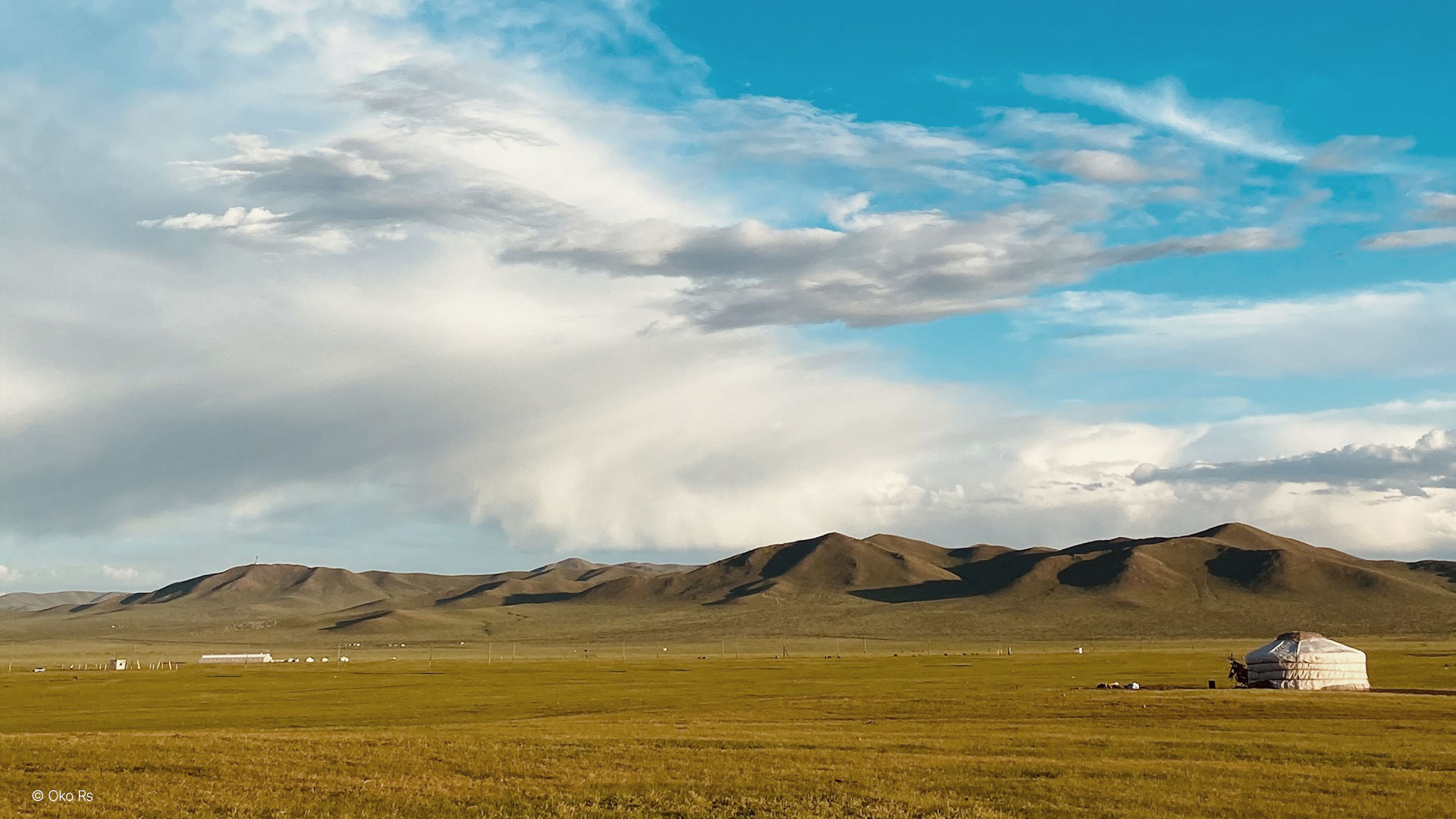
His home is the Ger, the mobile dwelling of the nomadic peoples, a circular tent made of wood and felt, assembled and dismantled with the ease of those who are never afraid to move on.

.

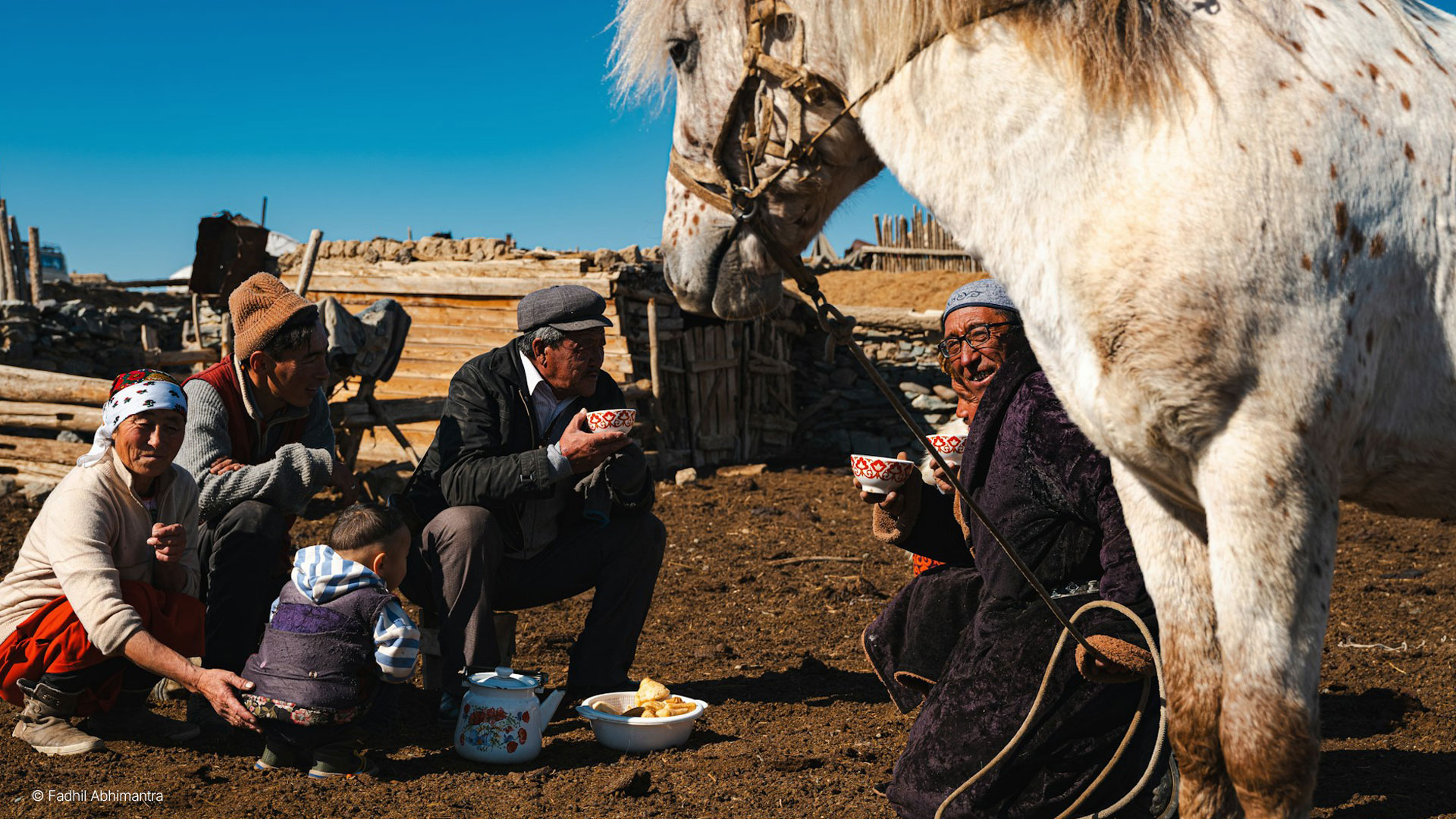
“My name is Tumen,” he says, smiling.
“We don’t live in houses of stone, we live in universes that can travel.”

.

And truly, stepping inside his Ger feels like crossing the threshold into a perfect, self-contained universe.
Everything within revolves around the circle, the shape of the sky, of time, of harmony. There are no corners, no barriers: energy flows freely, like the wind across the steppe.

Above, the wooden ring of the roof — the Toono — lets the light in. It’s more than a skylight: it’s a solar clock, a natural calendar marking the rhythm of the day. As the sun’s rays drift slowly across the earthen floor, Tumen watches them as if they were ancient letters written by the sky itself.
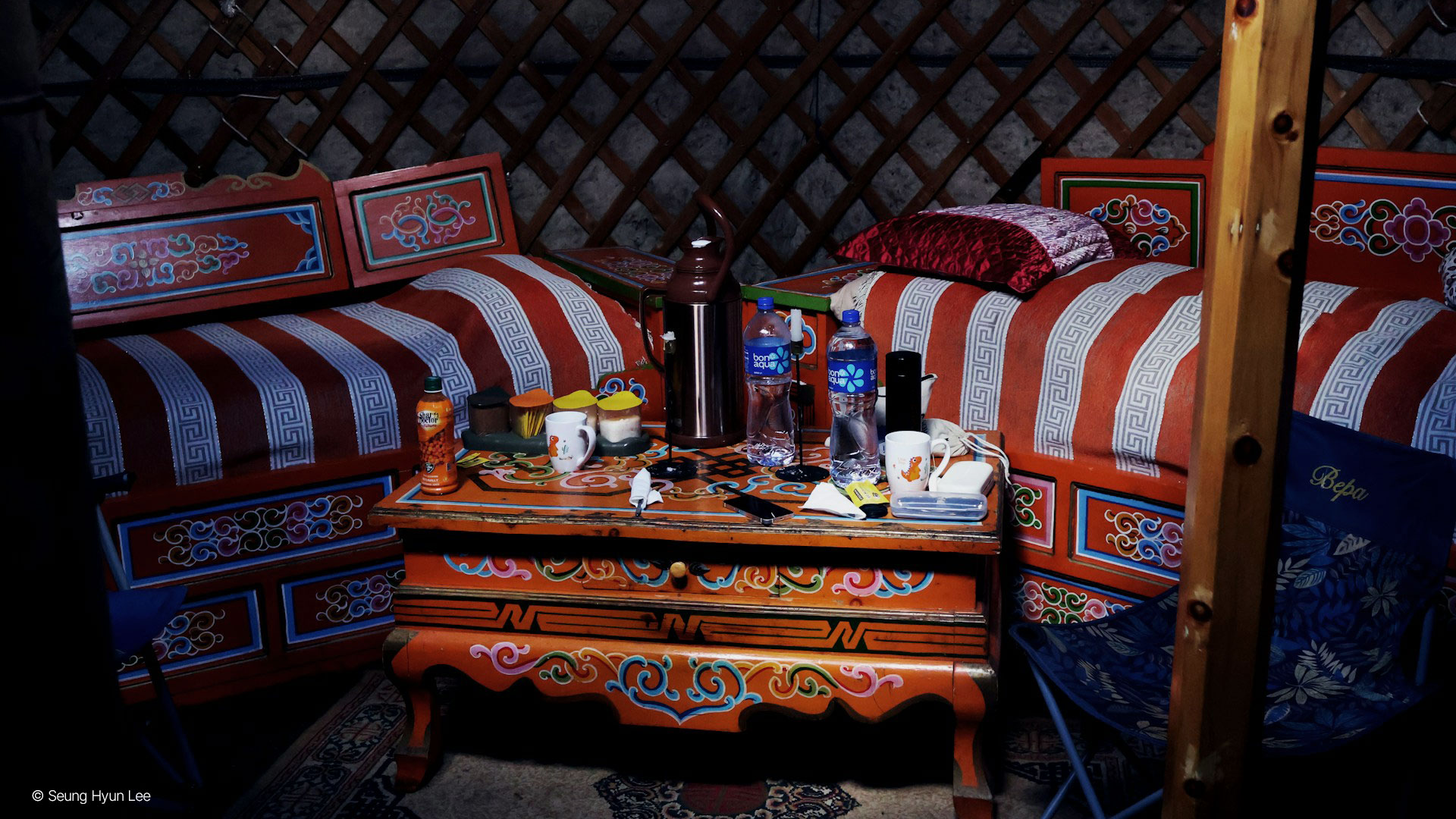
At the centre burns the Golomt, the hearth. Around it, meals are cooked, stories are told, laughter is shared. It is the beating heart of the home, the fire that never dies, even when outside the temperature drops to forty below.
Two slender columns, the Bagana, hold up the dome of the tent. But they are not ordinary beams; they represent the axis of the world. The link between the earth and the Eternal Sky. No one would dare lean anything against them; to do so would be to interrupt the breath of the universe.


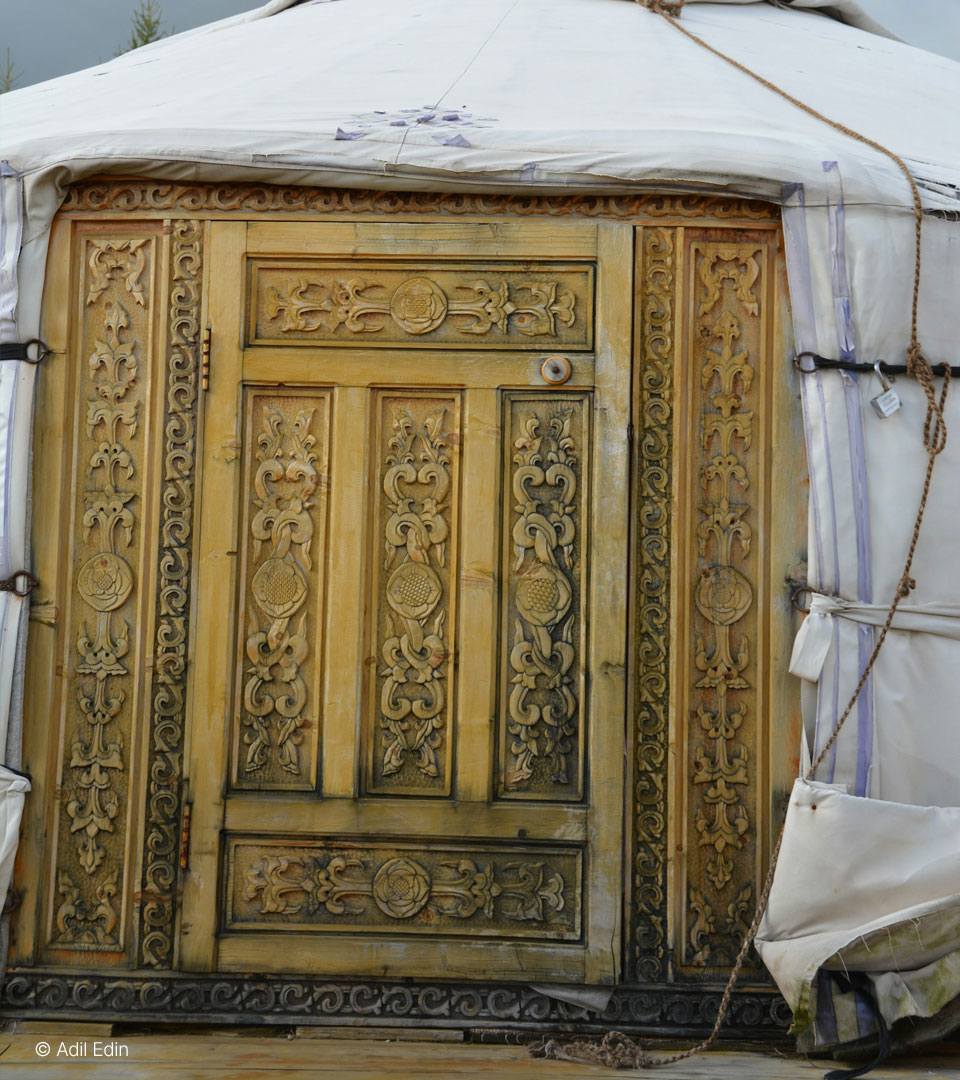
The door, the Úd, always faces south, to welcome every ray of sunlight. When entering, one moves clockwise, following the path of the sun, not just out of habit, but as an act of reverence for the flow of life.
And mind the threshold, to step on it would be an insult.

“It’s the soul of the house,” says Tumen.

“To disrespect it is to offend the spirits who guard it.”

The order within the Ger is a silent language.
To the north lies the Khoimor, the sacred space of the ancestors. To the west, the men’s realm: saddles, bows, knives. To the east, his wife’s world: tools, tea, fermented milk.
Within a single room, heaven and earth, masculine and feminine, present and memory, coexist.


Outside, Mongolia is an ocean of wind.

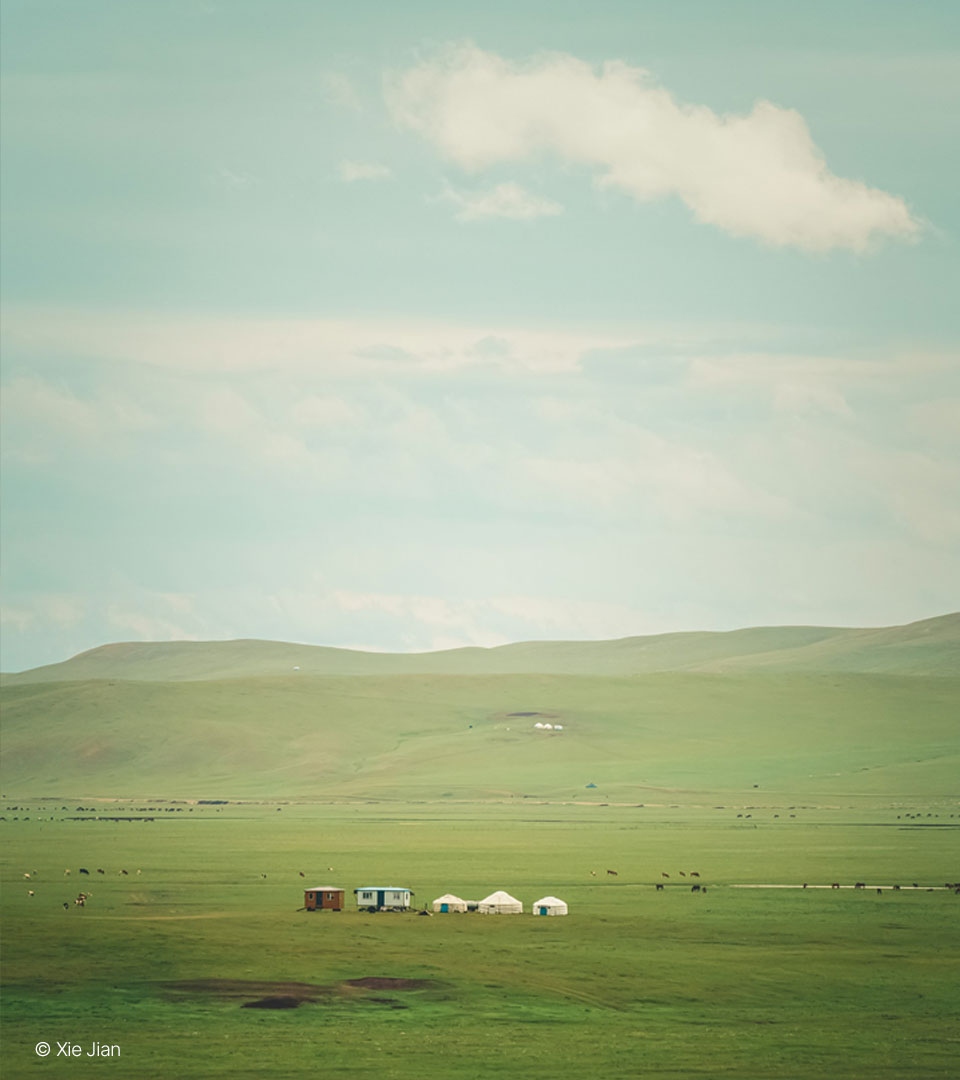
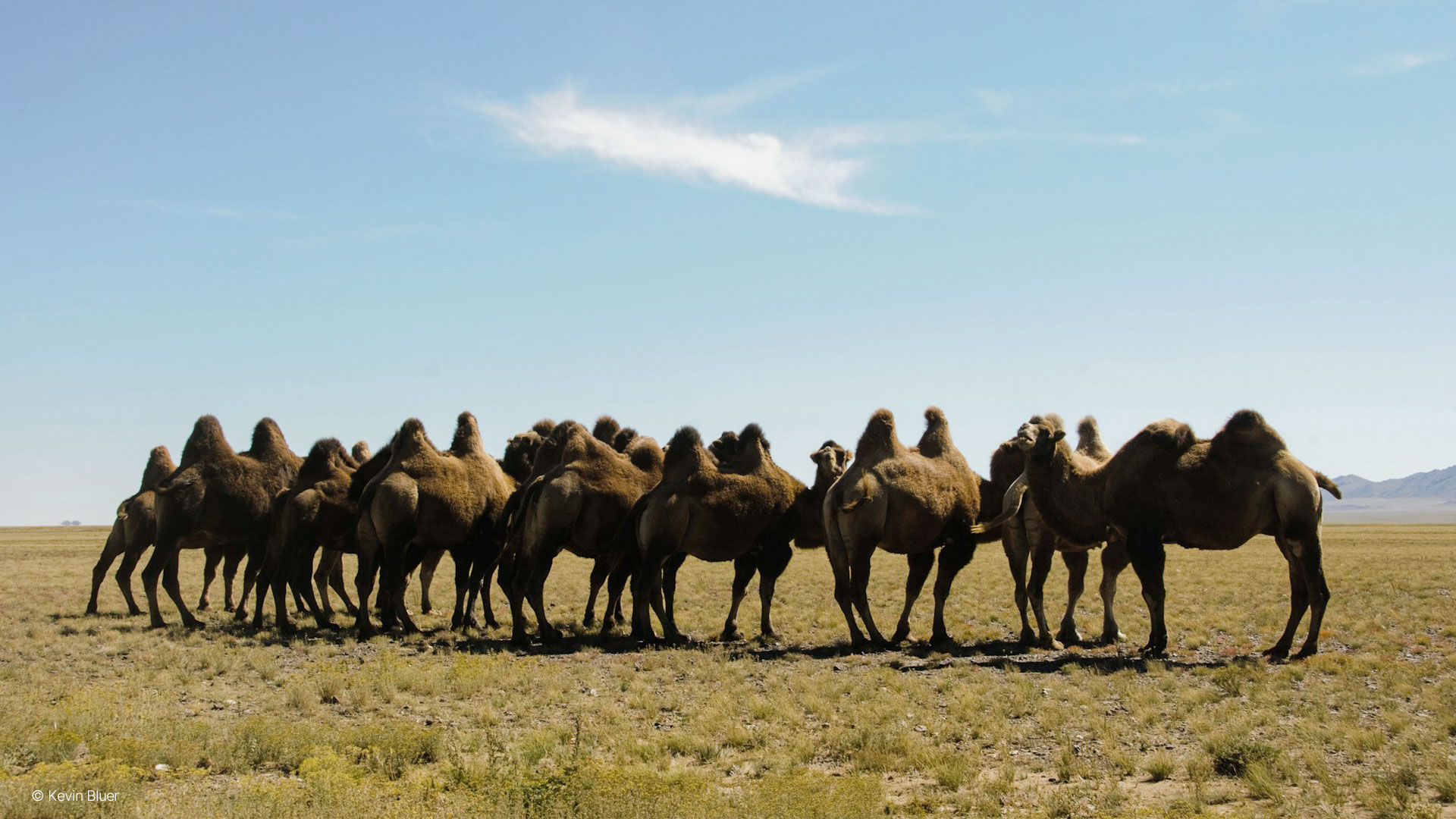
The herds graze slowly, horses run free, and in the distance other Gers appear —tiny white dots scattered across the green expanse, like shells on a sea of grass. When the pasture is spent or the winds shift, the family dismantles everything in less than an hour. The house disappears, loaded onto camels. The steppe returns to silence, as if no one had ever been there.

“Our true home,” says Tumen, “is not a fixed place.
It’s the order we carry within. Wherever we raise the Ger, we find our world again.”

And perhaps this is the great lesson of Mongolia’s nomads:
that to dwell is not to possess, but to belong.
That the beauty of a home is not measured by its walls, but by the breath it shares with the sky.


Author: Reo Aromi

Photos by © Oko Rs | Fadhil Abhimantra | Kevin Bluer | Xie Jian | Adil Edin